

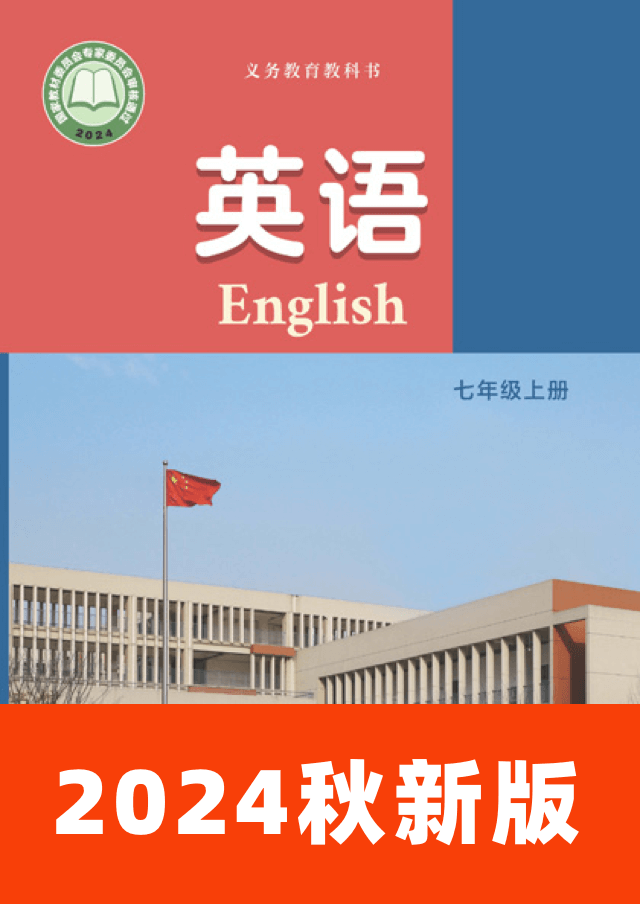
 切换教材
 免费下载音频
Unit 4课文原文、中英文对照及听力音频听读
Unit 4 翻译:第 4 单元
School days 翻译:上学日
Learning beyond the books. 翻译:学习,不止于书本。
In this unit, we will 翻译:在本单元中,我们将
1. read about interesting classes at school; 翻译:1. 阅读学校有趣的课程;
2. get to know about school field trips and school chores; 翻译:2. 了解学校实地考察和学校杂务;
3. talk and write about our life at school; 翻译:3. 谈论和写我们在学校的生活;
4. learn to enjoy our school life. 翻译:4. 学会享受我们的学校生活。
There are many interesting classes and activities in middle school. 翻译:中学有许多有趣的课程和活动。
Let's learn how to talk about our school life. 翻译:让我们学习如何谈论我们的学校生活。
Welcome to the unit 翻译:欢迎来到本单元
A day at school 翻译:在学校的一天
A. Look at the table of Millie's day. 翻译:A. 看看米莉一日的表格。
Complete the table on the right with your own daily activities. 翻译:用你自己的日常活动完成右边的表格。
Millie's day 翻译:米莉的一日
7 a.m. 翻译:早上 7 点
Get up 翻译:起床
7:20 a.m. 翻译:上午 7 点 20 分
Have breakfast 翻译:吃早餐
7:40 a.m. 翻译:上午 7 点 40 分
Go to school 翻译:去上学
8 a.m. 翻译:上午 8 点
Do morning exercises 翻译:做早操
8:15 a.m. 翻译:上午 8 点 15 分
Have lessons 翻译:上课
11:50 a.m. 翻译:上午 11 点 50 分
Have lunch 翻译:吃午饭
1:30 p.m. 翻译:下午 1 点 30 分
Have lessons 翻译:上课
4 p.m. 翻译:下午 4 点
Do after-school activities 翻译:做课外活动
6:20 p.m. 翻译:下午 6 点 20 分
Have dinner 翻译:吃晚饭
7 p.m. 翻译:下午 7 点
Help with housework 翻译:帮助做家务
7:30 p.m. 翻译:晚上 7 点 30 分
Do homework 翻译:做作业
9:30 p.m. 翻译:晚上 9 点 30 分
Go to bed 翻译:睡觉
My day 翻译:我的一天
B. Millie and Simon are talking about their school days. 翻译:B. 米莉和西蒙正在谈论他们的学生时代。
Work in pairs and talk about your school days. 翻译:两人一组,谈谈你的学生时代。
Use the conversation below as a model. 翻译:以下面的对话为例。
What time do you get up in the morning on weekdays, Simon? 翻译:西蒙,你周工作日早上几点起床?
I usually get up at 6:45 a.m. and then go for a short jog. 翻译:我通常早上 6 点 45 分起床,然后去慢跑。
And you? 翻译:你呢?
I get up at 7. 翻译:我 7 点起床。
I always read a little. 翻译:我总是阅读一会。
What do you like best about your school days? 翻译:你上学时最喜欢什么?
I like the after-school activities. 翻译:我喜欢课外活动。
I go to the Book Club and the Volleyball Club and have lots of fun. 翻译:我去读书俱乐部和排球俱乐部玩得很开心。
What about you? 翻译:那你呢?
I'm in the Football Club. 翻译:我在足球俱乐部。
I really enjoy myself there, and I can make friends too. 翻译:我在那里玩得很开心,我也可以交朋友。
C. What do you like best about your school days? Discuss it with a partner. 翻译:C. 你上学时最喜欢什么?与搭档讨论。
Reading 翻译:阅读
School days 翻译:上学日
Millie wrote an email to her online friend Tommy. 翻译:米莉给她的网友汤米写了一封电子邮件。
Here is the email. 翻译:这是电子邮件。
Before reading, think about the questions below. 翻译:在阅读之前,请思考以下问题。
1. What are some interesting classes at your school? 翻译:1. 你们学校有哪些有趣的课程?
2. What activities do you often do after school? 翻译:2. 你放学后经常做什么活动?
Usually we fill keywords in the subject line of an email to let others know what we are talking about in the email. 翻译:通常,我们在电子邮件的主题行中填写关键字,让其他人知道我们在电子邮件中谈论什么。
TO 翻译:给
Tommy 翻译:汤米
SUBJECT 翻译:主题
My school days 翻译:我上学的日子
Dear Tommy, 翻译:亲爱的汤米,
This is my first term at Sunshine Middle School. 翻译:这是我在阳光中学的第一学期。
I feel great! 翻译:我感觉很好!
School starts at 8 in the morning. 翻译:学校早上 8 点开始上课。
Usually, we do morning exercises first. 翻译:通常,我们先做早操。
Then our lessons begin at 8:15. 翻译:然后我们的课 8 点 15 分开始。
I like Chinese best! 翻译:我最喜欢语文!
We read the works of many famous writers. 翻译:我们阅读了许多著名作家的作品。
These works are really amazing. 翻译:这些作品确实令人惊叹。
We have Biology classes on Tuesdays and Thursdays. 翻译:我们星期二和星期四有生物课。
We learn about many living things and nature. 翻译:我们了解许多生物和自然。
It is really interesting! 翻译:这真的很有趣!
After-school activities are great fun too! 翻译:放学后的活动也很有趣!
I am in the school volleyball team, and we practise on Friday afternoons. 翻译:我在学校排球队,我们周五下午练习。
We have a field trip each term. 翻译:我们每学期都有一次实地考察。
Tomorrow morning we will leave for a farm to pick apples. 翻译:明天早上我们要去农场摘苹果。
What is your schoollife like? 翻译:你的学校生活怎么样?
Hope to hear from you soon. 翻译:希望很快能收到你的来信。
Best wishes, 翻译:美好的祝愿,
Wang Xinyue 翻译:王欣悦
SEND 翻译:发送
A. Complete the chart below with the information in Millie's email. 翻译:A. 用米莉电子邮件中的信息填写下表。
Life at Sunshine Middle School 翻译:阳光中学的生活
B. Read Millie's email again. 翻译:B. 再次阅读米莉的电子邮件。
Write a T if a sentence is true or an F if it is false. 翻译:如果一个句子是正确的,就写 T,如果是错误的,就写 F。
Then correct the false one(s). 翻译:然后纠正错误。
1. Millie should get to school before 8:15. 翻译:1. 米莉应该在 8 点 15 分之前到学校。
2. Millie's favourite subject is English. 翻译:2. 米莉最喜欢的科目是英语。
3. The students read many great works in Chinese classes. 翻译:3. 学生们在语文课上读了许多名著。
4. The students have a Biology lesson once a week. 翻译:4. 学生们每周上一节生物课。
5. The students are going on a field trip to a park. 翻译:5. 学生们要去公园实地考察。
6. Millie enjoys life at her new school. 翻译:6. 米莉很享受在新学校的生活。
C. Tommy is writing an email back to Millie. 翻译:C. 汤米正在给米莉回一封电子邮件。
Complete his email with the correct forms of the words and phrase in the box below. 翻译:用下面方框中单词和短语的正确形式填写他的电子邮件。
amazing 翻译:令人大为惊奇的
nature 翻译:大自然,天性
writer 翻译:作家
term 翻译:学期;期
field trip 翻译:野外考察,实地考察
team 翻译:队,组
practise 翻译:训练,练习
works 翻译:作品
D. Think about the questions below. Share your answers with your classmates. 翻译:D. 想想下面的问题。与同学分享你的答案。
1. What do you think about Millie's school life? 翻译:1. 你觉得米莉的学校生活怎么样?
2. What lessons do you like best? Why? 翻译:2. 你最喜欢什么课?为什么?
3. What do you think is special about your school life? 翻译:3. 你认为你的学校生活有什么特别之处?
Share it with your classmates. 翻译:与你的同学分享。
Grammar 翻译:语法
A. Prepositions of time 翻译:A. 时间介词
We use different prepositions to talk about time. 翻译:我们用不同的介词来谈论时间。
Months ofthe year: January February March April May June August September October November December 翻译:一年中的月份:一月 二月 三月 四月 五月 六月 九月 十月 十一月 十二月
Seasons: spring summer autumn winter 翻译:季节:春 夏 秋 冬
Preposition 翻译:介词
Used for 翻译:用于
Example 翻译:例子
in 翻译:在⋯⋯期间
parts of day 翻译:部分时间
We read English in the morning. 翻译:我们早上读英语。
months 翻译:月(复数)
Our new term starts in September. 翻译:我们的新学期从九月开始。
seasons 翻译:季节(复数)
We have a field trip in autumn. 翻译:我们秋天有一次实地考察。
years 翻译:年(复数)
We took a trip to a farm in 2022. 翻译:2022 年,我们去了一个农场。
on 翻译:在
days 翻译:天(复数)
We don't go to school on Saturday. 翻译:我们星期六不上学。
dates 翻译:日期(复数)
Our summer holiday starts on 1 July. 翻译:我们的暑假从 7 月 1 日开始。
parts of a specific day 翻译:特定日期的部分时间
We have a Biology class on Tuesday morning. 翻译:我们星期二上午有一节生物课。
special holidays 翻译:特殊节假日
We have lots of fun on Children's Day. 翻译:儿童节我们玩得很开心。
at 翻译:在
time of day 翻译:一天中的时间
Millie often gets up at 7 o'clock. 翻译:米莉经常 7 点钟起床。
age 翻译:年龄
Children in China usually start school at 6 years old. 翻译:中国的孩子通常在 6 岁开始上学。
Days of the week: Sunday Monday Tuesday Wednesday Thursday Friday Saturday 翻译:一周中的几天:星期日 星期一 星期二 星期三 星期四 星期五 星期六
A1. Sandy is talking to her grandma about her school life. 翻译:A1. 桑迪正在和她奶奶谈论她的学校生活。
Complete their conversation with the correct prepositions of time. 翻译:用正确的时间介词完成她们的对话。
A2. Talk with your partner about your school life, using prepositions of time. 翻译:A2. 用时间介词和你的搭档谈谈你的学校生活。
B. Adverbs of frequency 翻译:B. 频率副词
Adverbs of frequency tell you how often things happen. 翻译:频率副词告诉你事情发生的频率。
Look at the graph below. 翻译:请看下面的图表。
never 翻译:从未
seldom 翻译:很少
sometimes 翻译:有时
often 翻译:经常
usually 翻译:通常
always 翻译:总是
B1. Sandy is writing about how often she and her classmates exercise. 翻译:B1. 桑迪正在写她和同学锻炼的频率。
Look at the graph above. 翻译:看看上面的图表。
Then help her complete the notes below. 翻译:然后帮她完成下面的笔记。
We put an adverb of frequency after the verb be. 翻译:我们在 be 动词后面加上一个频率动词。
I am always happy. 翻译:我总是很开心。
B2. Write six sentences about your school activities, using each adverb of frequency above once. 翻译:B2. 写六个关于你学校活动的句子,每个副词至少使用一次。
Pronunciation 翻译:发音
Vowels (IlI) 翻译:元音 (IlI)
Read the following words. 翻译:阅读以下单词。
Pay attention to the sounds of the letter groups in bold. 翻译:注意粗体字母组的发音。
art 翻译:艺术
farm 翻译:农场
park 翻译:公园
star 翻译:明星
/ɑː/ 翻译:
call 翻译:呼叫
draw 翻译:画
corner 翻译:角
more 翻译:更多
/ɔ:/ 翻译:
leaf 翻译:叶
read 翻译:阅读
meet 翻译:遇见
see 翻译:看见
/i:/ 翻译:
bread 翻译:面包
head 翻译:头
heavy 翻译:重的
weather 翻译:天气
/e/ 翻译:
cool 翻译:酷
school 翻译:学校
food 翻译:食物
group 翻译:组,群,批
/u:/ 翻译:
book 翻译:书
good 翻译:好的
look 翻译:看
would 翻译:将
/ʊ/ 翻译:
bird 翻译:鸟
term 翻译:学期,期
nurse 翻译:护士
word 翻译:单词
/ɜː/ 翻译:
after 翻译:之后
dinner 翻译:晚餐
father 翻译:父亲
worker 翻译:工人
/ə/ 翻译:
A. Read the words below. Put each of them in the correct place. 翻译:A. 读下面的单词。把它们放在正确的位置。
cook 翻译:烹调
cool 翻译:酷
first 翻译:第一
foot 翻译:脚
free 翻译:自由的
hall 翻译:大厅,礼堂
healthy 翻译:健康的
never 翻译:从未
part 翻译:部分
player 翻译:游戏者
ready 翻译:愿意迅速做某事;准备好
noodle 翻译:面条
sport 翻译:运动
start 翻译:开始
world 翻译:世界
team 翻译:队,组
/u:/ 翻译:
/i:/ 翻译:
/e/ 翻译:
/ʊ/ 翻译:
/ɜː/ 翻译:
/ɑː/ 翻译:
/ɔ:/ 翻译:
/ə/ 翻译:
B. Look at the following pairs of words. 翻译:B. 看下面的两组单词。
Read the first word of each pair. 翻译:读每组单词的第一个单词。
Then try to read the second one correctly. 翻译:然后试着正确地读第二个。
1. shirt 翻译:1. 衬衫
birth 翻译:出生
2. look 翻译:2. 样貌
wood 翻译:木材
3. clean 翻译:3. 干净的
bean 翻译:豆
4. winter 翻译:4. 冬季
winner 翻译:赢家
5. car 翻译:5. 汽车
bar 翻译:酒吧
6. talk 翻译:6. 谈话
chalk 翻译:粉笔
7. food 翻译:7. 食物
noon 翻译:正午
8. bread 翻译:8. 面包
dead 翻译:死去的
9. turn 翻译:9. 转弯
hurt 翻译:伤害
C. Practise saying the following phrases. 翻译:C. 练习说以下短语。
1. a car in the park 翻译:1. 公园里的一辆车
2. food at school 翻译:2. 学校的食物
3. clean the street 翻译:3. 打扫街道
4. a girl in a skirt 翻译:4. 一个穿裙子的女孩
5. look at the book 翻译:5. 看这本书
6. ready for breakfast 翻译:6. 准备吃早餐
7. a nurse at work 翻译:7. 工作中的护士
8. walk around the wall 翻译:8. 绕着墙走
9. after dinner 翻译:9. 晚饭后
Integration 翻译:整合
Learning by doing 翻译:边做边学
A Sandy is reading the school field trip notice for the Grade 7 students. 翻译:A 桑迪正在阅读 7 年级学生的学校实地考察通知。
Read it with her and answer the questions below. 翻译:与她一起阅读并回答以下问题。
School field trips for Grade 7 students 翻译:7 年级学生的学校实地考察
Field trip 1: 翻译:实地考察 1:
Picking apples (in autumn) 翻译:摘苹果(在秋天)
Activities: 翻译:活动:
Visit an apple farm 翻译:参观苹果农场
Learn how to grow apples 翻译:学习如何种植苹果
Help pick apples 翻译:帮忙摘苹果
Field trip 2: 翻译:实地考察 2:
Planting trees (in spring) 翻译:种树(在春天)
Activities: 翻译:活动:
Have a tour of the fields 翻译:参观一下田野
Learn how to plant trees 翻译:学习如何种树
Help plant trees 翻译:帮助种树
Please find out more on the school website. 翻译:请在学校网站上找到更多信息。
1. What can the Grade 7 students do on the autumn field trip? 翻译:1. 7 年级的学生可以在秋季实地考察中做什么?
2. What do you like about your field trips? Why? 翻译:2. 你喜欢实地考察的哪些方面?为什么?
B. Sandy is listening to Mr Wu talking about one of the field trips. 翻译:B. 桑迪正在听吴老师谈论一次实地考察。
Listen to Mr Wu and help Sandy complete her notes. 翻译:听吴老师的话,帮桑迪完成笔记。
Good morning everyone! 翻译:大家早上好!
Let me tell you about our field trip this term. 翻译:让我告诉你们我们这学期的实地考察。
Picking apples on sunny apple farm. 翻译:在阳光明媚的苹果农场摘苹果。
The trip takes place on the fourteenth of October. 翻译:这次旅行在十月十四日。
We traveled to the farm by bus. 翻译:我们乘公共汽车去农场。
The bus leaves at eight thirty a.m. 翻译:公共汽车早上八点半出发,
and get back at five thirty p.m. 翻译:下午五点半回来。
The bus is usually on time. 翻译:公共汽车通常准时。
So don't be late. 翻译:所以不要迟到。
We have lots to do on the farm. 翻译:我们在农场有很多事情要做。
In the morning we watched a video and learn how to grow apples. 翻译:早上,我们看一段视频,学习如何种植苹果。
In the afternoon we have a lesson about how to pick apples. 翻译:下午我们有一节关于如何摘苹果的课。
Then we helped pick the apples on the farm. 翻译:然后我们在农场帮忙摘苹果。
When we leave the farm, 翻译:当我们离开农场时,
we can take some apples home and share them with our families. 翻译:我们可以带一些苹果回家和家人分享。
When listening for details, 翻译:在听细节的时候,
look for words like in the morning, in the afternoon and then. 翻译:找早上、下午和之后这类单词。
These words help us follow the content. 翻译:这些词有助于我们理解内容。
C. Sandy and her classmates are talking about school field trips. 翻译:C. 桑迪和她的同学们正在谈论学校的实地考察。
Work in groups and talk about the topic. 翻译:分组工作,讨论主题。
Use the conversation below as a model. 翻译:以下面的对话为例。
What do you like about school field trips, Amy? 翻译:埃米,你喜欢学校的实地考察吗?
I love field trips because I like being outside. 翻译:我喜欢实地考察,因为我喜欢在外面。
I can get close to nature. 翻译:我可以亲近大自然。
It's nice and quiet there. 翻译:那里很安静。
That's true. And you, Simon? 翻译:确实如此。你呢,西蒙?
I like the team work on the trips. 翻译:我喜欢旅行中的团队合作。
Everybody tries their best to make things better. 翻译:每个人都尽力让事情变得更好。
Yes, but sometimes field trips are too tiring. 翻译:是的,但有时候实地考察太累了。
I like our class duties on Mondays. 翻译:我喜欢我们周一的课堂作业。
It's good to keep our school area clean. 翻译:保持我们学区的清洁是件好事。
D. Sunshine Middle School newspaper asked students to write about how they learn by doing at school. 翻译:D. 阳光中学的报纸要求学生们写下他们在学校是如何边做边学的。
D1. Answer the questions below with the information about your school. 翻译:D1. 用你学校的信息回答以下问题。
Learning by doing at my school 翻译:在学校边做边学
1. What is it? 翻译:1. 这是什么?
2. How often does it take place? 翻译:2. 多久举行一次?
3. When does it take place? 翻译:3. 什么时候举行?
4. How many students take part in it? 翻译:4. 有多少学生参加?
5. What do you usually do? 翻译:5. 你通常做什么?
6. What can you learn from it? 翻译:6. 你能从中学到什么?
D2. Read Sandy's article about learning by doing at school. 翻译:D2. 阅读桑迪关于她在学校动手学习的文章。
Learning by doing chores 翻译:从家务中学习
In my class, we all work in groups and take turns to do different chores. 翻译:在我的班上,我们都分组工作,轮流做不同的家务。
My group works on Mondays. 翻译:我的小组星期一工作。
Usually, Simon cleans the windows. 翻译:通常,西蒙会擦窗户。
Daniel likes to sweep the floor. 翻译:丹尼尔喜欢扫地。
I clean the blackboard and empty the bins. 翻译:我擦黑板还有清空垃圾桶。
We have a 'class farm'. 翻译:我们有一个“阶级农场”。
We learn how to take care of the plants there. 翻译:我们学习如何照顾那里的植物。
I like to water them. 翻译:我喜欢给它们浇水。
We do chores for our class and learn about teamwork. 翻译:我们为班级做家务学习团队合作。
We are happy to keep our classroom clean and tidy. 翻译:我们很乐意保持教室的干净整洁。
D3. Write an article about learning by doing at your school based on the information in Part D1. 翻译:D3. 根据D1部分的信息写一篇关于在学校边做边学的文章。
Use Sandy's article as a model. 翻译:以桑迪的文章为例。
Useful expressions 翻译:常用表达
My favourite chore/activity is ... 翻译:我最喜欢的家务/活动是⋯⋯
At my school, every student ... 翻译:在我们学校,每个学生⋯⋯
I ... in the morning/afternoon/evening. 翻译:我⋯⋯在早上/下午/晚上。
I like to ... 翻译:我喜欢⋯⋯
On Mondays/Tuesdays/..., I ... 翻译:星期一/星期二⋯⋯,我⋯⋯
This job/chore/activity helps me ... 翻译:这个工作/家务/活动帮助我⋯⋯
We do...and learn about... 翻译:我们做⋯⋯并学习⋯⋯
I like this chore/activity because ... 翻译:我喜欢这个家务/活动,因为⋯⋯
Assessment 翻译:评估
What I can do 翻译:我能做什么
Me 翻译:我
Partner 翻译:搭档
1. I can talk about school life at Sunshine Middle School. 翻译:1. 我可以谈谈阳光中学的学校生活。
2. I can use prepositions of time and adverbs of frequency correctly. 翻译:2. 我能正确使用时间介词和频率副词。
3. I can talk and write about my school days with the new words in this unit. 翻译:3. 我可以用本单元的单词谈论和书写我的学生时代。
4. I can pronounce the sounds /a:/, /ɔ:/, /i:/, /e/, /u:/, /ʊ/, /ɜː/and /ə/ correctly in words. 翻译:4. 我能正确发音单词中的a:/, /ɔ:/, /i:/, /e/, /u:/, /ʊ/, /ɜː/ 和/ə/。
5. I know how to enjoy school life. 翻译:5. 我知道如何享受学校生活。
Assess your learning of new words and grammar by doing the exercises on page 115. 翻译:通过做第 115 页的练习来评估你对新单词和语法的学习。
Result: 翻译:结果:
Weak 翻译:一般
Good 翻译:不错
Wonderful 翻译:非常棒
I am good at ______. 翻译:我擅长______。
I need to spend more time on ______. 翻译:我需要花更多的时间在______。
My action plan: ______ 翻译:我的行动计划:______
Further study 翻译:拓展学习
Let us remember: one book, one pen, one child and one teacher can change the world. 翻译:让我们记住:一本书、一支笔、一个孩子和一位老师可以改变世界。
Teachers open the door, but you must enter by yourself. 翻译:老师开门,但你必须自己进去。
Tell me and I forget, 翻译:告诉我,我会忘记;
teach me and I may remember, 翻译:教我,我可能会记住;
involve me and I learn. 翻译:让我参与,我会学习。
The beautiful thing about learning is that no one can take it away from you. 翻译:学习的美妙之处在于,没有人能从你身上夺走它。
There are many famous quotes and sayings about learning. 翻译:有许多关于学习的名言和谚语。
Find more and discuss them with your classmates. 翻译:查找更多内容并与同学讨论。
最新学习记录 更新时间:2026-10-25 09:27:44

 已安全检测